

The Scientific Research into Nutrition and Mental Health
This is such a fascinating subject, and I’m sure in another 25 years, our understanding of the vital role of diet in mental health will have advanced far beyond our current understanding.
Nutritional psychiatry is just one name for this rapidly emerging field, and new research is emerging all the time. For instance, a landmark study published in the American Journal of Psychiatry (Jacka et al., 2010) found a significant link between diet quality and the risk of depression. The research revealed that individuals adhering to a Mediterranean diet, rich in vegetables, fruits, whole grains, lean protein, and healthy fats, had a lower risk of developing depressive symptoms compared to those consuming a typical Western diet high in processed foods and sugar.
Further support for the nutrition-mental health connection comes from a randomized controlled trial known as the SMILES trial (Jacka et al., 2017), which demonstrated that dietary interventions could very effectively reduce symptoms of depression. Participants who received dietary counseling and increased their intake of nutrient-dense foods showed significant improvements in mood and depressive symptoms, underscoring the potential of dietary changes as a complement to other mental health treatments.
In 2019, a large meta-analysis of numerous other studies also concluded that a Mediterranean, or anti-inflammatory, diet was associated with a reduced risk of depression.
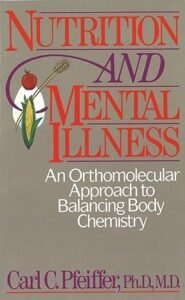
I believe that a lot of this recent research wouldn’t have been possible without the discoveries of Dr. Carl Pfeiffer back in the sixties and seventies. Pfeiffer was a pioneering biochemist and physician whose work significantly contributed to the field of what was then known as orthomolecular psychiatry, and focused on the use of nutrients in maintaining mental health and treating a wide variety of mental health disorders.
His groundbreaking book Nutrition and Mental Illness: An Orthomolecular Approach to Balancing Body Chemistry, is well worth reading if you can still get hold of it today. Pfeiffer demonstrated, through his own clinical research with patients, that many mental health issues were predictably linked to common nutritional imbalances or deficiencies in the body.
His research and clinical practice for the rest of his career was aimed at identifying and correcting these imbalances through dietary changes, supplementation, and lifestyle adjustments. He argued that by restoring the body’s optimal nutritional state, one could effectively treat and possibly prevent a wide range of mental health conditions, including depression, anxiety, schizophrenia, and attention deficit disorders.
Key Aspects of Pfeiffer’s Work
Individual Biochemical Variability: He emphasized that individual differences in biochemistry necessitate personalized treatment approaches. He was known for his detailed assessments of patients’ nutritional statuses to tailor treatments to their specific needs.
Nutrient Therapy: He advocated for the use of high doses of vitamins, minerals, and amino acids to correct specific biochemical imbalances in patients. This approach is based on the belief that certain mental illnesses are associated with particular nutritional deficiencies or excesses.
Pyroluria: Pfeiffer’s work brought attention to conditions such as pyroluria, a biochemical imbalance involving an abnormal synthesis and metabolism of hemoglobin. He believed that this condition could lead to a deficiency in vitamin B6 and zinc, contributing to a variety of mental health symptoms.
Heavy Metal Toxicity: He also explored the impact of heavy metal toxicity on mental health, suggesting that exposure to metals like lead, mercury, and cadmium could lead to psychiatric symptoms. I think he was well ahead of his time on this one. Pfeiffer recommended detoxification strategies and supplements to mitigate these effects.
Overall, Carl Pfeiffer’s contributions laid the groundwork for a more holistic approach to mental health treatment that considers the deep connection between our nutrition and brain function. While his methods have been met with both support and skepticism, his work continues to influence the fields of nutritional and integrative psychiatry, encouraging much of today’s research into the role of diet and nutrients in mental well-being.
As the other studies linked on this page demonstrate, there is a growing body of evidence that our nutrition plays a vital role in our mental health.
I’d certainly recommend examining your diet to see what changes you could make that might help. If you can also find a practitioner who is familiar with these ideas, or who can check you for nutritional deficiencies or excesses, then that might be worth exploring as well.